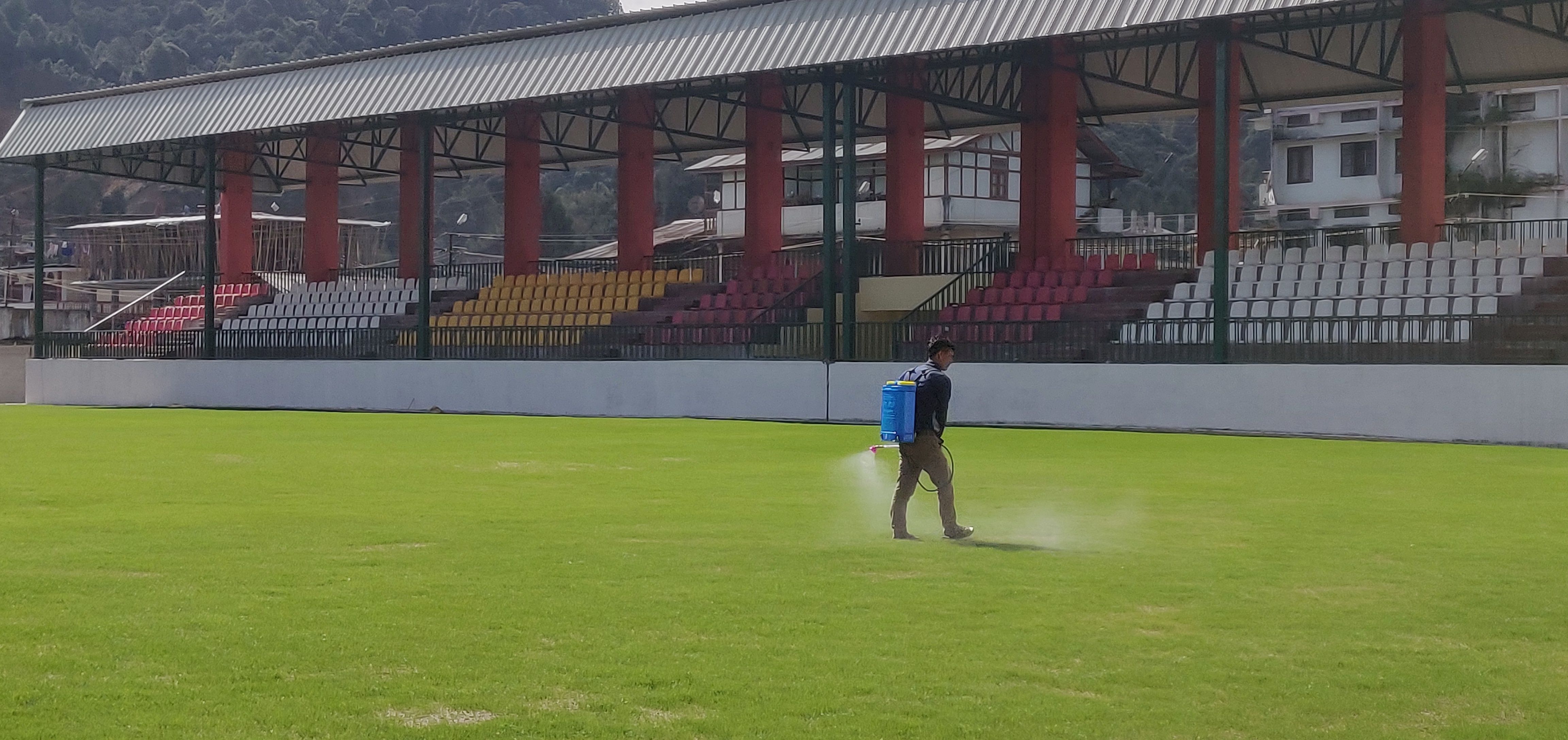
Sports Field Agronomy & Maintenance

GLC offers planning maintenance to environmental solutions to meet any or all of your requirements for

Sports Field Agronomy & Maintenance

  • Safety & Security - Safety Procedures, Fire Safety, Material Safety Data Sheets(MSDS), Hazardous Material, Equipment Safety, Tool Safety, Security
  • Staffing - Personnel Management, Labor Cost Controls, Supervision
  • Staff Training - Appearance Standards-Field SetUp and Maintenance Training, Equipment Training, Chemical Training, Safety Training, SecurityTraining, Environmental Training
  • Maintenance Standards & Goals - Turf Grasses Fields, Pitches, Overrun Areas, Irrigation, Signage, Detail work, Cultural Activites, Chemical Applications, Sand and Seed, Nursery.
  • Agronomic and Water Standards -Fields & Pitches
  • Field Set Up and Maintenance - Field SetUp,Mowing
  • Shop Set Up and Maintenance - Material Stockpiles, Fuel and Chemical Storage, Tools, Equipment, and Machinery, Lighting and Signage
  • Equipment Maintenance - Operation and Care of Equipment, Repair and Maintenance, Tools and Diagnostic Equipment, Maintenance Schedule, Maintenance Records
  • Hazardous Material Management - Storage, Mixing, Application, Fuels, Lubricants, and Solvents

Our team consists of highly skilled professionals with their background, knowledge and experience gained from every corner of the world, from surveying & design, planning stage, earthmoving, grading, construction, drainage/irrigation & finishing, seeding, grassing, grow-in maintenance for the following types of facilities:

FOOTBALL/ RUGBY/ POLO GROUND

Frequently Asked Questions

Sports field agronomy is the science and practice of managing turfgrass health on a sports ground, covering soil condition, fertilization, irrigation, mowing, and pest control to keep the playing surface safe and consistent. It's distinct from one-time construction; agronomy is the ongoing discipline that keeps a field performing well for years. GreenLinks offers Sports Field Agronomy & Maintenance as a dedicated service covering agronomic and water standards, maintenance standards, and field set-up for football, rugby, and polo grounds. A common mistake is treating agronomy as basic lawn care rather than a specialized discipline requiring trained agronomists.

Sports field maintenance covers everything needed to keep a built field safe and playable: mowing and field set-up, agronomic and water standards for turf and irrigation, maintenance standards for pitches and overrun areas, equipment upkeep, and safety/security procedures. GreenLinks structures its Sports Field Agronomy & Maintenance service around these exact areas, along with staffing, staff training, and hazardous material management. Facilities that treat maintenance as "just mowing" often miss drainage checks, equipment servicing, and chemical handling protocols, all of which affect field safety and turf lifespan over time.

Maintenance costs vary by field size, grass type, usage intensity, and whether the work is done in-house or contracted through an Annual Maintenance Contract (AMC), so there's no fixed nationwide figure. Natural grass fields generally cost more to maintain than synthetic turf because of mowing, fertilization, irrigation, and agronomic labor, but they also don't carry the eventual carpet-replacement cost synthetic surfaces do. GreenLinks does not publish fixed AMC rates since scope and site conditions differ; the accurate way to budget is a site assessment through its Sports Field Agronomy & Maintenance service.

Mowing frequency depends on grass type, season, and growth rate, but during active growing periods, warm-season grasses common on Indian football and rugby grounds typically need mowing multiple times a week to stay dense and wear-tolerant. GreenLinks includes mowing under Field Set Up and Maintenance in its agronomy service. Mowing too infrequently or cutting too short both weaken turf density, making the field more vulnerable to wear and injury-causing unevenness.

The most frequent mistakes are mowing too short or irregularly, skipping aeration and topdressing, over- or under-watering due to poor irrigation monitoring, neglecting equipment maintenance, and treating safety/chemical handling as optional. GreenLinks structures its Sports Field Agronomy & Maintenance service specifically around these areas, maintenance standards, agronomic and water standards, equipment maintenance, and hazardous material management, to prevent them. Left uncorrected, these mistakes compound: poor irrigation weakens turf, which then can't recover from mowing stress, accelerating overall field decline.

An under-maintained field typically shows thinning or bald turf patches, uneven surfaces from compacted soil, poor drainage response after rain, and increased injury risk from an inconsistent playing surface. These problems compound over time; a field that's neglected for a season or two often needs renovation rather than simple upkeep to recover. GreenLinks' Sports Field Agronomy & Maintenance service exists to prevent this decline through structured, ongoing care rather than reactive fixes after problems appear.

An AMC is a formal agreement where a provider takes ongoing responsibility for a sports field's maintenance, mowing, agronomy, irrigation, equipment care, and safety compliance, for a fixed annual scope, rather than one-off callouts. This structure is common across Indian infrastructure maintenance generally and applies directly to sports grounds. GreenLinks' Sports Field Agronomy & Maintenance service covers the full scope an AMC would typically include: staffing, agronomic standards, equipment maintenance, and hazardous material management. Facilities without a formal AMC often see inconsistent care and reactive, more expensive repairs.

It depends on your facility's scale and in-house expertise. In-house staff can work if they're properly trained in agronomy, equipment care, and safety protocols, all areas GreenLinks includes in its own staff training scope, but many facilities lack agronomists or safety-trained crews internally. An AMC with a specialist consultant brings structured standards, trained staff, and accountability in one contract, which usually costs more than basic in-house mowing but prevents the turf decline and safety issues that come from inconsistent, under-qualified care.

GreenLinks was founded in 2007 as a golf industry consultancy and has since built a dedicated Sports Field Agronomy & Maintenance service alongside its Golf Agronomy & Maintenance offering, applying the same agronomic expertise, root-zone science, irrigation management, turf health, to football, rugby, and polo grounds. Its team includes certified agronomists, horticulturists, and greenkeepers who work across both golf and sports field projects. This shared expertise means the same rigor applied to golf greens carries over to sports field turf management.

Natural grass generally requires more ongoing labor, mowing, fertilizing, irrigating, and aerating, than artificial turf, which mainly needs brushing, debris removal, and periodic infill top-ups. However, artificial turf isn't maintenance-free either, and its sub-base and drainage still need attention over its usable life. GreenLinks specializes in natural grass agronomy and maintenance for football, rugby, and polo grounds, where the trade-off for higher maintenance involvement is typically better ball roll, player comfort, and lower installation cost.
Copyright © 2023-25 GreenLinks Consulting LLP. All rights reserved | Sitemap | Developed By OptMum Digital.