Sports Field Planning & Design

Our planning and design are inspired by the Sustainable design guidelines and practices established by the FIFA Green Goal programme, International Cricket Board which strives to encourage and support sustainable and environmentally responsible field planning & design and construction. Environment being the integral part at all phases from inception to feasibility, planning & design, construction, operations & maintenance in all our projects.

Our Approach

Is environmental sustainability in sports field planning, design and construction.

Our Planning

Is to integrate the principles and practices of long-term sustainability features such as resources efficiency,
affordable & community engaged development, healthy lifestyle, unique marketing strategies, minimal operations & maintenance cost.

OUR DESIGN PRINCIPLES

01

ENVIRONMENTAL SUSTAINABILITY

To integrate sports field and the environment by engaging communities, encouraging efficiency in resource management, generating employment. Such integration essentially safeguards all the aspects of a site, its surrounding areas and its inhabitants to ensure environmental sustainability for centuries.

02

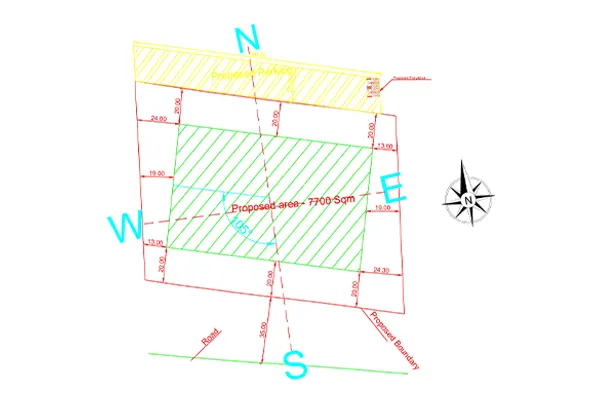
ORIENTATION

When planning the orientation of the field, the primary consideration is its position in relation to the sun and prevailing wind.

03

DRAINAGE & IRRIGATION

Essential part of the field, effective drainage and efficient irrigation enhances the performance of the field and provides more play time.

04

ROOT-ZONE & NATURAL TURF

A well laid out root zone is the key to overall health and life span of the field.

Local climate of the site determines the selection of the turf grasses. Generally, natural native turf grasses are most suitable and receptive.

Frequently Asked Questions

Sports field planning is the early-stage process of deciding how a sports field will be sited, oriented, and structured before design and construction begin — covering site suitability, environmental integration, orientation to sun and wind, and how drainage and irrigation will be laid out. GreenLinks Consulting, a golf and sports facility consultancy operating PAN-India since 2007, treats sports field planning as the foundation stage of its Sports Field Planning & Design service, where decisions made early (like field orientation and drainage routing) shape how well the finished field performs and how much it costs to maintain.

Sports field design is the technical process of translating a site plan into the field's actual specifications — the root-zone construction, turfgrass selection, drainage and irrigation systems, and field grading. GreenLinks' Sports Field Planning & Design service is built around four core design principles: environmental sustainability, orientation, drainage & irrigation, and root-zone & natural turf. On real projects like Ziro Stadium in Arunachal Pradesh and Ghatikia Ground in Odisha, this design process resulted in FIFA-spec football fields with advanced sub-surface drainage systems built to withstand high-rainfall conditions.

Sports field planning is the early decision-making stage — where the field will sit, how it will be oriented to sun and wind, and how it fits environmentally and operationally into the site. Sports field design is the technical execution of those decisions — root-zone construction, turfgrass selection, and drainage/irrigation system layout. GreenLinks offers both as one connected service rather than two separate engagements, because a design decision (like which turfgrass to use) only works well if the planning decision behind it (like field orientation and drainage routing) was made correctly in the first place.

GreenLinks' sports field planning and design is built around four principles: environmental sustainability (integrating the field with its surrounding community and environment), orientation (positioning the field relative to the sun and prevailing wind), drainage & irrigation (effective drainage and efficient irrigation to maximise play time), and root-zone & natural turf (a well-constructed root zone using turfgrass suited to local climate). These principles are applied across the full project lifecycle — from inception and feasibility through planning, design, construction, and ongoing operations & maintenance — rather than being treated as a design-phase checklist alone.

Drainage and irrigation design directly determines how much a field can actually be played on — poor drainage leads to waterlogging and cancelled play after rain, while inefficient irrigation leaves turf stressed and inconsistent. GreenLinks lists drainage & irrigation as a core design principle specifically because effective drainage and efficient irrigation increase usable play time. On real projects, this has meant designing advanced sub-surface drainage systems built to withstand high-rainfall conditions — for example, at Ziro Stadium in Arunachal Pradesh and Ghatikia Ground in Odisha, both built with sub-surface drainage and manual irrigation systems suited to their local rainfall patterns.

The process starts with site planning — assessing soil type, topography, and orientation to sun and wind — followed by design work covering root-zone construction, turfgrass selection, and drainage & irrigation layout. From there, GreenLinks' full-lifecycle service moves into construction (earthwork, grading, drainage installation, field construction), seeding, and grow-in maintenance before the field is play-ready. On Ziro Stadium and Ghatikia Ground, this process took each field from a raw, undeveloped site to a fully constructed, FIFA-spec natural turf field with sub-surface drainage and irrigation.

For high-rainfall regions, GreenLinks' approach centres on advanced sub-surface drainage systems built specifically to withstand heavy rainfall, combined with an aggregate and sand base field construction that helps water move through the root-zone rather than pooling on the surface. This is demonstrated directly on the Ziro Stadium project in Arunachal Pradesh's North East region — an area known for heavy monsoon rainfall — where the field was built from scratch with this drainage approach and a climate-matched blend of cool- and warm-season grasses.
Copyright © 2023-25 GreenLinks Consulting LLP. All rights reserved | Sitemap | Developed By OptMum Digital.